👋 Goodbye low test coverage and slow QA cycles (Sponsored)
Bugs sneak out when less than 80% of user flows are tested before shipping. However, getting that kind of coverage (and staying there) is hard and pricey for any team. QA Wolf’s AI-native solution provides high-volume, high-speed test coverage for web and mobile apps, reducing your organization’s QA cycle to less than 15 minutes. They can get you:
The benefit? No more manual E2E testing. No more slow QA cycles. No more bugs reaching production. With QA Wolf, Drata’s team of engineers achieved 4x more test cases and 86% faster QA cycles. ⭐ Rated 4.8/5 on G2 This week’s system design refresher:
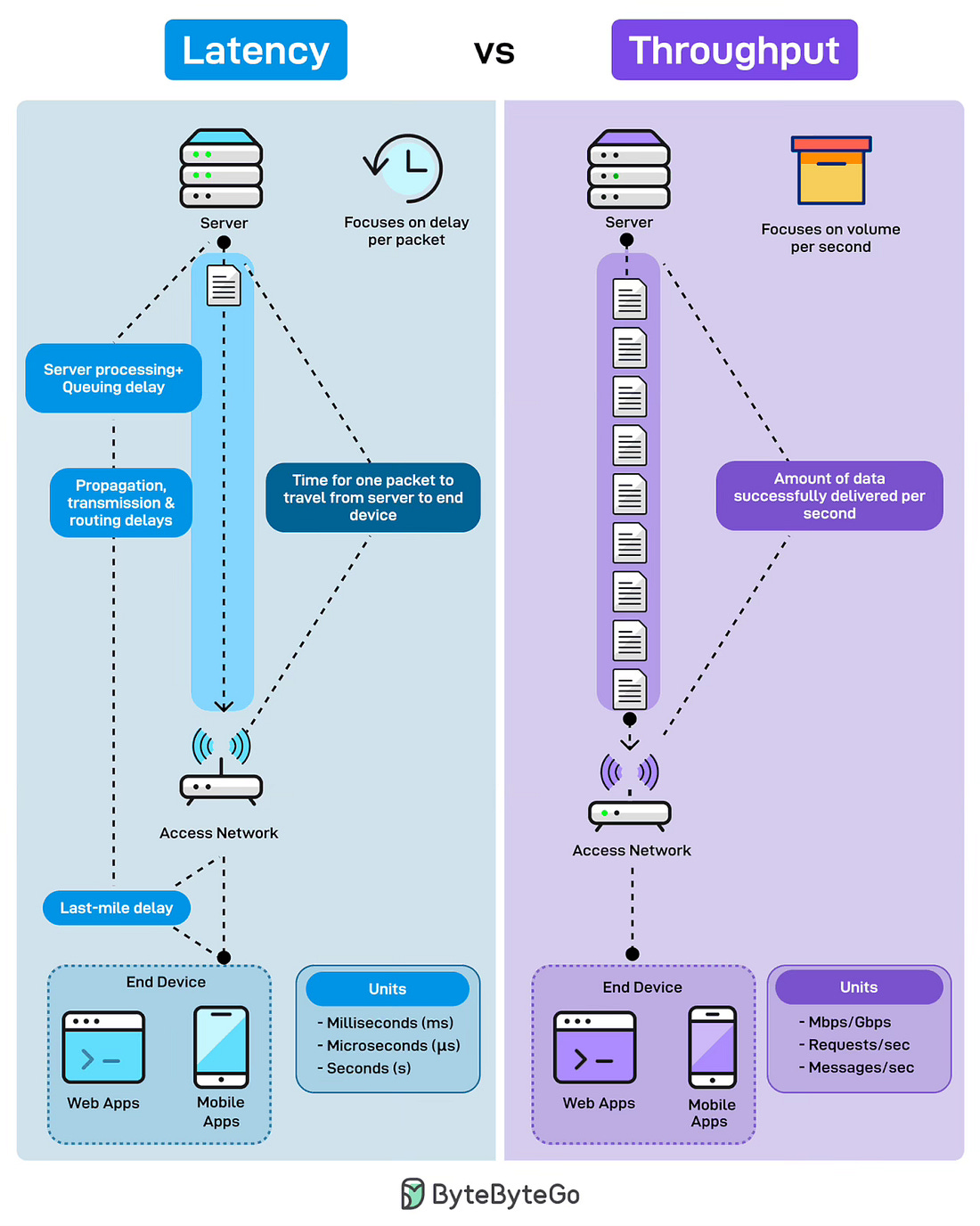
Latency vs. ThroughputEver wondered why your app feels slow even when the bandwidth looks fine? Latency and throughput explain two very different stories of performance.
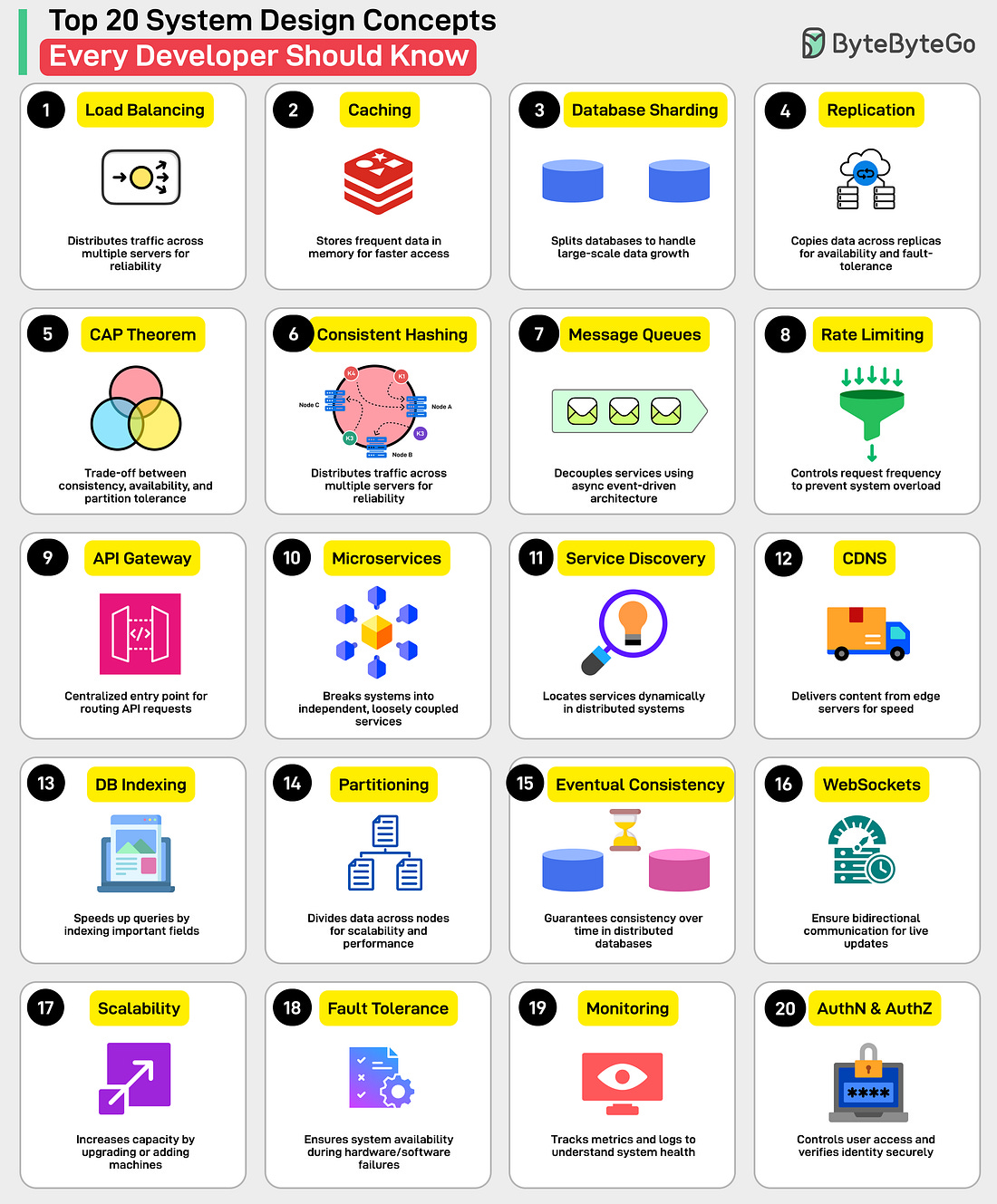
Latency measures the delay per packet. It is what users feel when they click a button. It’s responsiveness. It is the time for one request to travel from the server to the end device. This includes server processing time, queuing delays, propagation through the network, transmission delays, and the last-mile connection to the user’s device. Top 20 System Design Concepts You Should Know
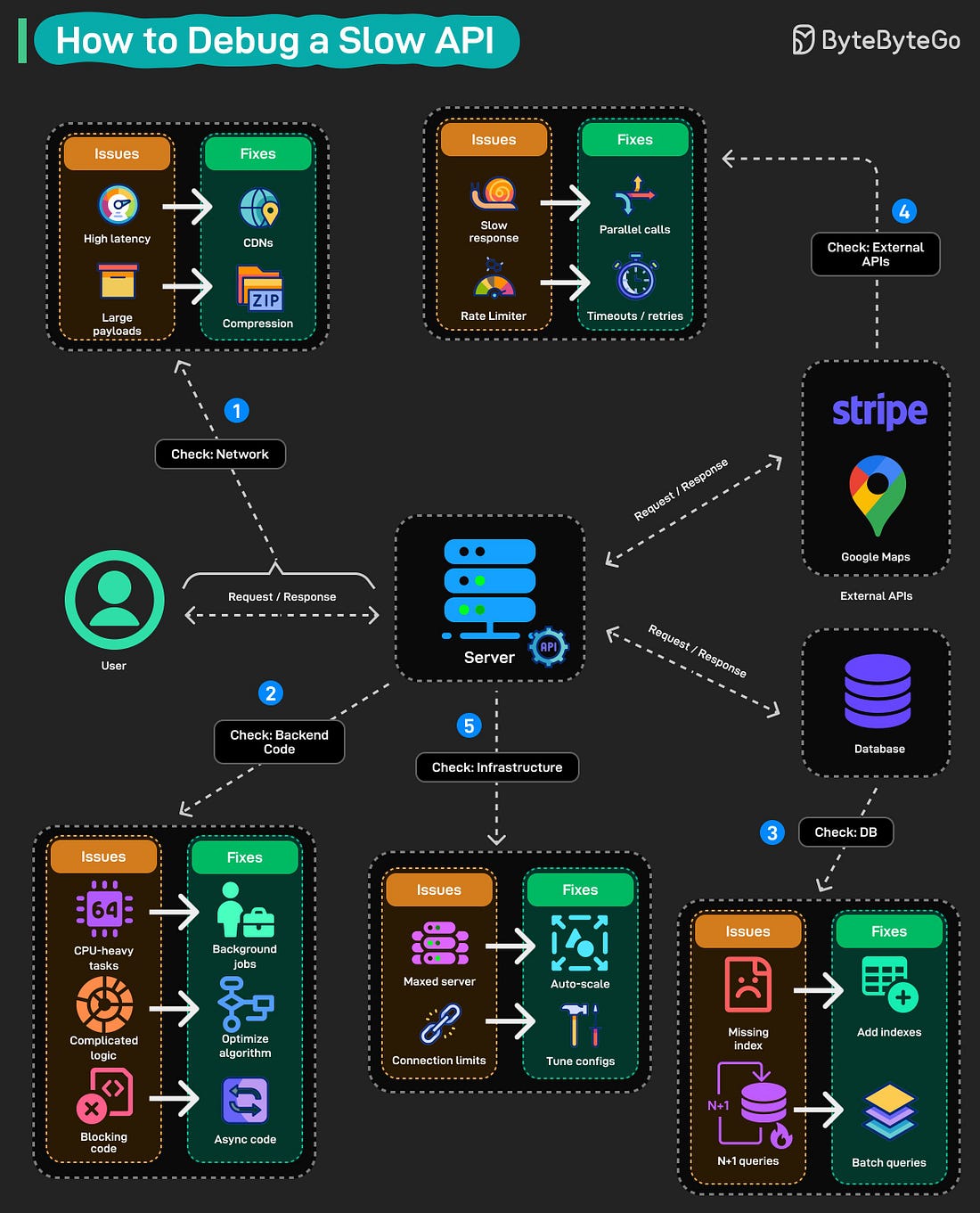
Over to you: Which other System Design concept will you add to the list? How to Debug a Slow API?Your API is slow. Users are complaining. And you have no idea where to start looking. Here is the systematic approach to track down what is killing your API.
Start with the network: High latency? Throw a CDN in front of your static assets. Large payloads? Compress your responses. These are quick wins that don’t require touching code. Check your backend code next: This is where most slowdowns hide. CPU-heavy operations should run in the background. Complicated business logic that needs simplification. Blocking synchronous calls that should be async. Profile it, find the hot paths, fix them. Check the database: Missing indexes are the classic culprit. Also watch for N+1 queries, where you are hammering the database hundreds of times when one batch query would do. Don’t forget external APIs: That Stripe call, that Google Maps request, they are outside your control. Make parallel calls where you can. Set aggressive timeouts and retries so one slow third-party doesn’t tank your whole response. Finally, check your infrastructure: Maxed-out servers need auto-scaling. Connection pool limits need tuning. Sometimes the problem isn’t your code at all, it’s that you are trying to serve 10,000 requests with resources built for 100. The key is being methodical. Don’t just throw solutions at the wall. Measure first, identify the actual bottleneck, then fix it. Over to you: What is the weirdest performance issue you have tracked down? How LLMs See the World
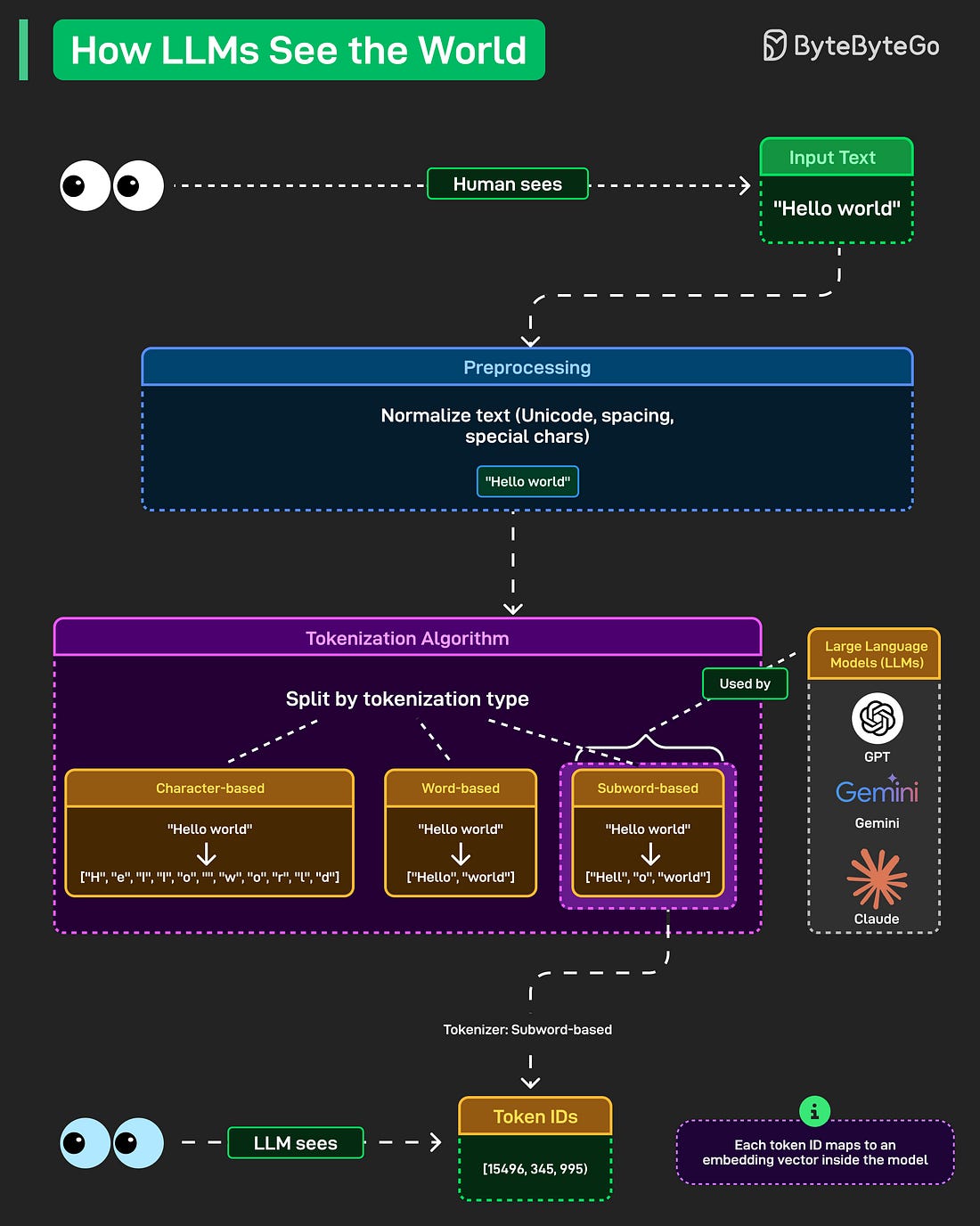
When you type “Hello world” into ChatGPT or Claude, the model isn’t processing those letters and spaces like you’re reading this post right now. It’s converting everything into numbers through a process most people never think about. Preprocessing comes first. Text gets normalized. Unicode characters, spacing quirks, and special symbols, they all get cleaned up and standardized. “Hello world” becomes a consistent format that the model can actually work with. Then comes tokenization. This is where things get interesting. The model splits text into tokens, and there are different approaches.
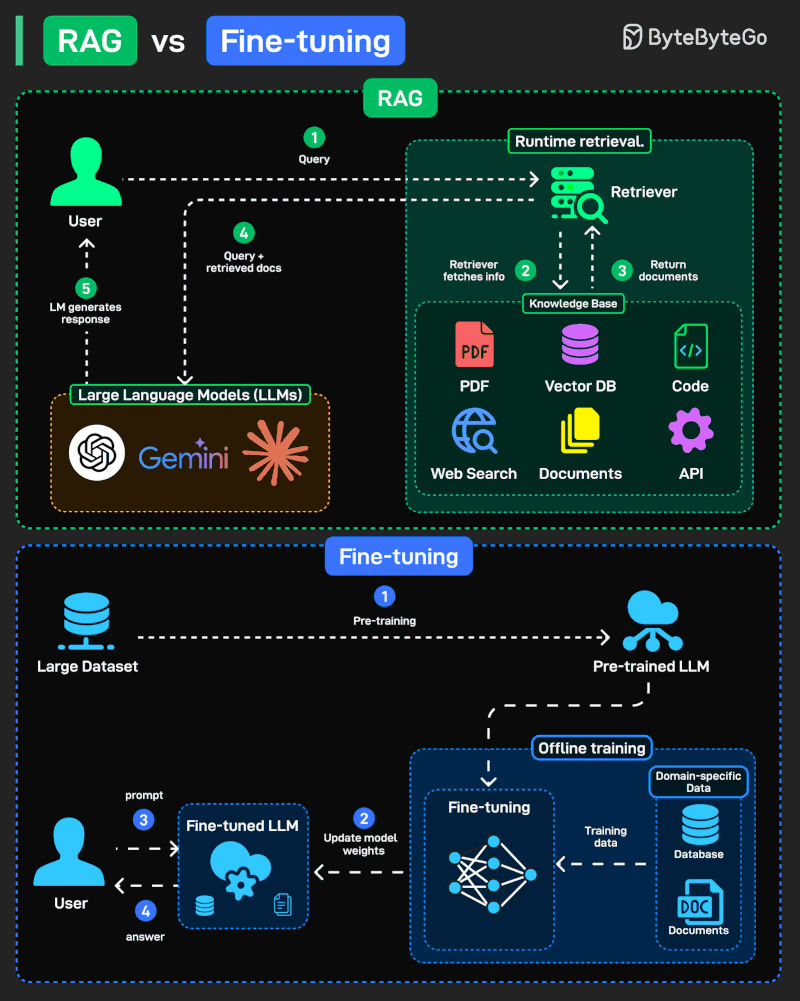
The final step is Token IDs. Those subwords get mapped to numbers like [15496, 345, 995]. Each token ID corresponds to an embedding vector inside the model. That’s what the neural network actually processes. Over to you: Why do some models handle code better than natural language? Is it the tokenizer? RAG vs Fine-tuning: Which one should you use?When it comes to adapting Large Language Models (LLMs) to new tasks, two popular approaches stand out: Retrieval-Augmented Generation (RAG) and Fine-tuning. They solve the same problem, making models more useful, but in very different ways.
RAG (Retrieval-Augmented Generation): Fetches knowledge at runtime from external sources (docs, DBs, APIs). Flexible, always fresh. Fine-tuning: Offline training that updates model weights with domain-specific data, making the model an expert in your field. Over to you: For your domain, is fresh knowledge (RAG) or embedded expertise (Fine-tuning) more valuable? SPONSOR USGet your product in front of more than 1,000,000 tech professionals. Our newsletter puts your products and services directly in front of an audience that matters - hundreds of thousands of engineering leaders and senior engineers - who have influence over significant tech decisions and big purchases. Space Fills Up Fast - Reserve Today Ad spots typically sell out about 4 weeks in advance. To ensure your ad reaches this influential audience, reserve your space now by emailing sponsorship@bytebytego.com.
|
Saturday, October 25, 2025
EP186: Latency vs. Throughput





Subscribe to:
Post Comments (Atom)
No comments:
Post a Comment