Growth is seductive: fast top-line momentum can mask a deeper problem — negative cash flow driven by working-capital needs. Todya’s article shows why quality investors must pair ROIC and reinvestment runway with a working-capital stress test so a profitable company doesn’t run out of cash while scaling. TL;DR
Why it mattersInvestors love durable profitability (ROIC > WACC). But profitability on the income statement can be illusory when growth forces the business to tie up cash in inventory or receivables. The result: a company can grow revenue and show profits yet need external cash to fund day-to-day operations. That’s the “growth starves cash” problem — and it kills otherwise attractive business models if management misjudges reinvestment needs or capital allocation priorities. Evidence: academic work shows that working-capital investments materially drive short-term cash outcomes and can be value-enhancing or value-destroying depending on efficiency and timing. (ScienceDirect)
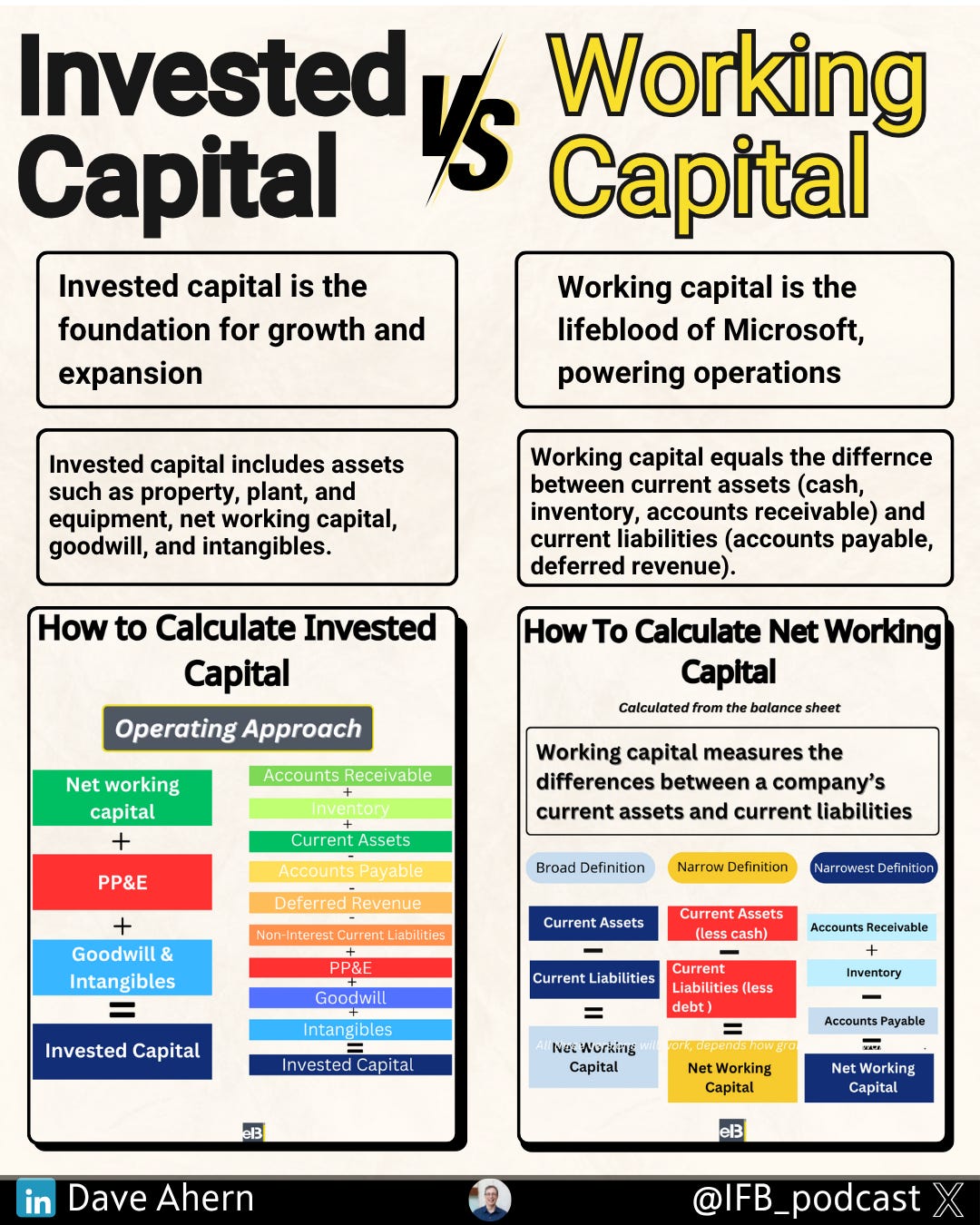
Core concepts (quality-investing angle)ROIC vs WACC — the starting gateWhy it matters: If ROIC consistently exceeds WACC, the company creates value for every dollar it reinvests. But what is being reinvested matters. Reinvestment can be capex, R&D, M&A or working capital. Working-capital-heavy reinvestment can be less durable — and more timing-sensitive — than productive capex. Investors must therefore separate returns on operating capital from returns on working capital. Reinvestment runway & capital intensityReinvestment runway = the sustainable level of growth that existing cash flows can fund before external capital is required. Compute incremental working capital per incremental revenue over the last 3–5 years. A high ratio → short runway. Prefer businesses where organic cash generation funds >50% of near-term growth. Unit economics & per-share framingUnit economics (contribution margin, payback period, customer LTV/CAC) tell you whether growth is profitable at scale. Per-share focus (FCF/share, EPS/share, share count changes) ties economics to investor returns — buybacks vs dilution change how reinvestment and working-capital needs are split between shareholders and creditors. Moat durability — evidence, not claimsLook for concrete moat evidence: ability to increase prices without losing volume, durable retention/switching costs, or structurally low working-capital needs (e.g., marketplace/asset-light models). Don’t accept “moat” as narrative — demand data (stable gross margins, stable DSO/Inventory days, high customer retention).
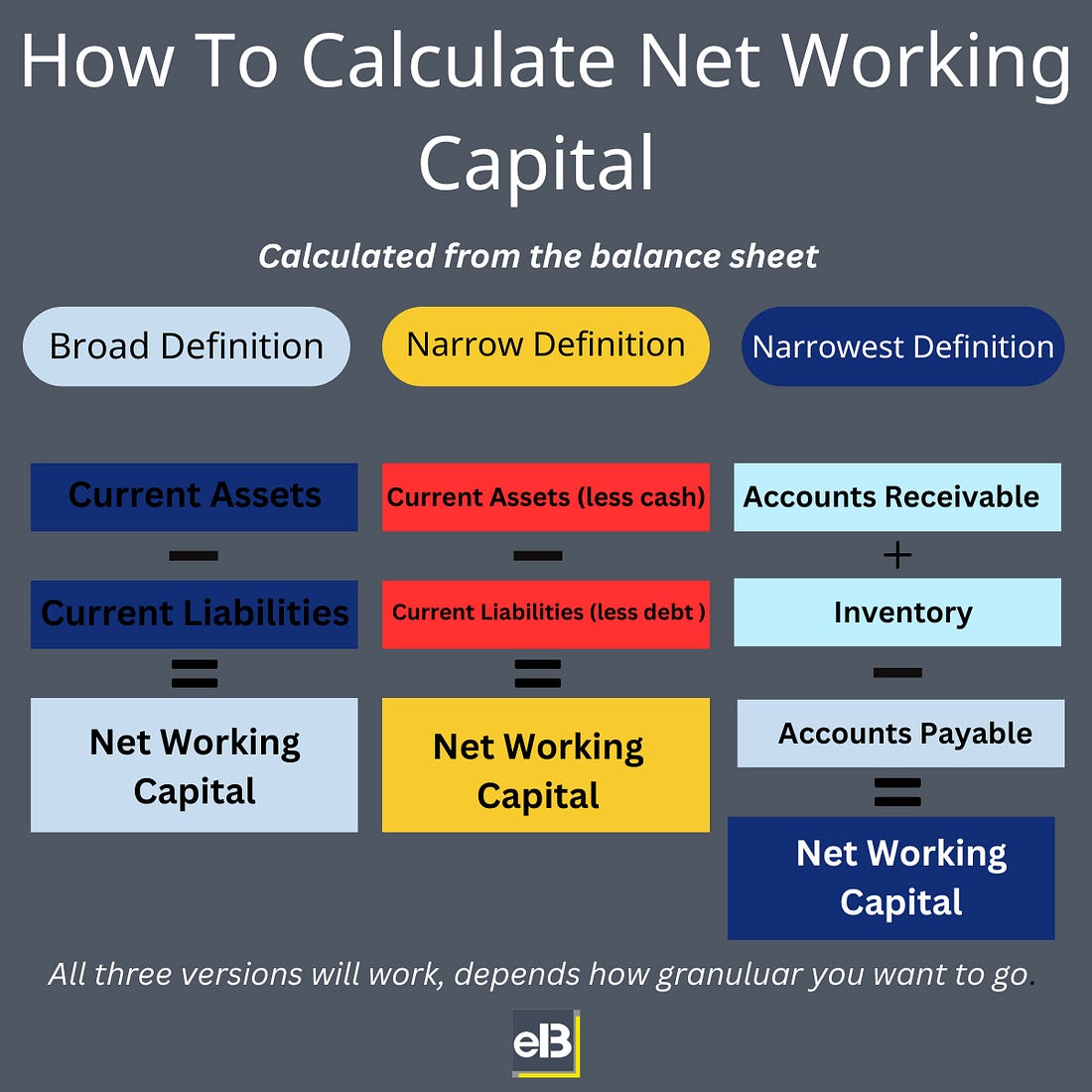
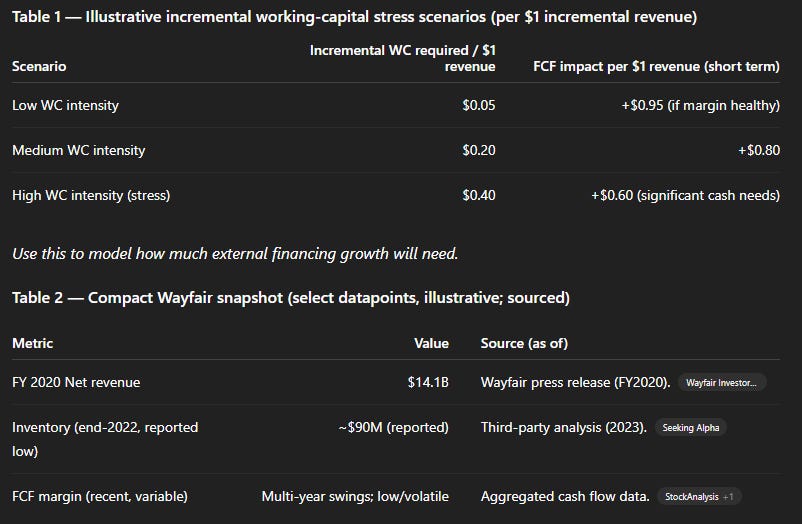
Worked example: Wayfair — a working-capital narrative (US, mid-cap+ context)Why Wayfair: an e-commerce player where working-capital dynamics (inventory, payables, and customer prepayments) materially affected cash flow while growth accelerated. Wayfair explicitly describes operation on a negative working-capital cycle in investor materials — meaning quarter-to-quarter growth can be a cash use even with strong revenue growth. (PublicNow Docs) Evidence: Wayfair’s press release and filings show rapid revenue growth in 2020 (FY net revenue $14.1B, up ~55% YoY) while gross profit and cash flow patterns shifted across years. Gross profit dollars grew materially, but working-capital variability — especially around inventory and returns — made operating cash flows volatile. (Wayfair Investor Relations) Result: Sustainable profitability requires monitoring the cash conversion cycle and incremental working-capital per $1 revenue. Wayfair’s model (marketplace, dropship + some inventory) reduced markdown risk relative to traditional retail but did not eliminate working-capital sensitivity. Agencies and rating firms note Wayfair’s working-capital profile when assessing credit. (Fitch Ratings) Caveats / alternative interpretations: Some argue negative working capital is efficient (customer pays before suppliers are paid). That’s true — until supplier terms tighten, returns spike, or growth accelerates faster than payables extension. Always tie working-capital analysis to supply-chain and return risk. Two small tables
How to do this yourself — step-by-step (practical)
Pitfalls & false positivesPitfall 1 — Negative working capital is always good. Not always; it can mask supplier leverage that can disappear in a stress. Checklist / one-pager (saveable)
Glossary
Further reading
References (selected; all “as of” dates given)
Educational content, not investment advice. You're currently a free subscriber to School of Investing. For the full experience, upgrade your subscription.
|
Wednesday, November 12, 2025
How Growth Starves Cash: A Working-Capital Stress Test





Subscribe to:
Post Comments (Atom)
No comments:
Post a Comment