AWS Guide to Cloud Architecture Diagrams (Sponsored)
Enhance visibility into your cloud architecture with expert insights from AWS + Datadog. In this ebook, AWS Solutions Architects Jason Mimick and James Wenzel guide you through best practices for creating professional and impactful diagrams. This week’s system design refresher:
Rate Limiter System Design: Token Bucket, Leaky Bucket, Scaling Docker vs Kubernetes
Docker is a container platform that lets you package applications with their dependencies and run them on a single machine. Here’s how it works:
Kubernetes is a container orchestration platform that manages containerized applications across a cluster of machines for scalability and resilience. Here’s how it works:
Over to you: Have you used Docker or Kubernetes in your projects? Batch vs Stream ProcessingData never stops flowing, but how we process it makes all the difference. When building data systems, two main approaches emerge: batch processing and stream processing. Both have their place, depending on whether you need accuracy over time or immediate insights.
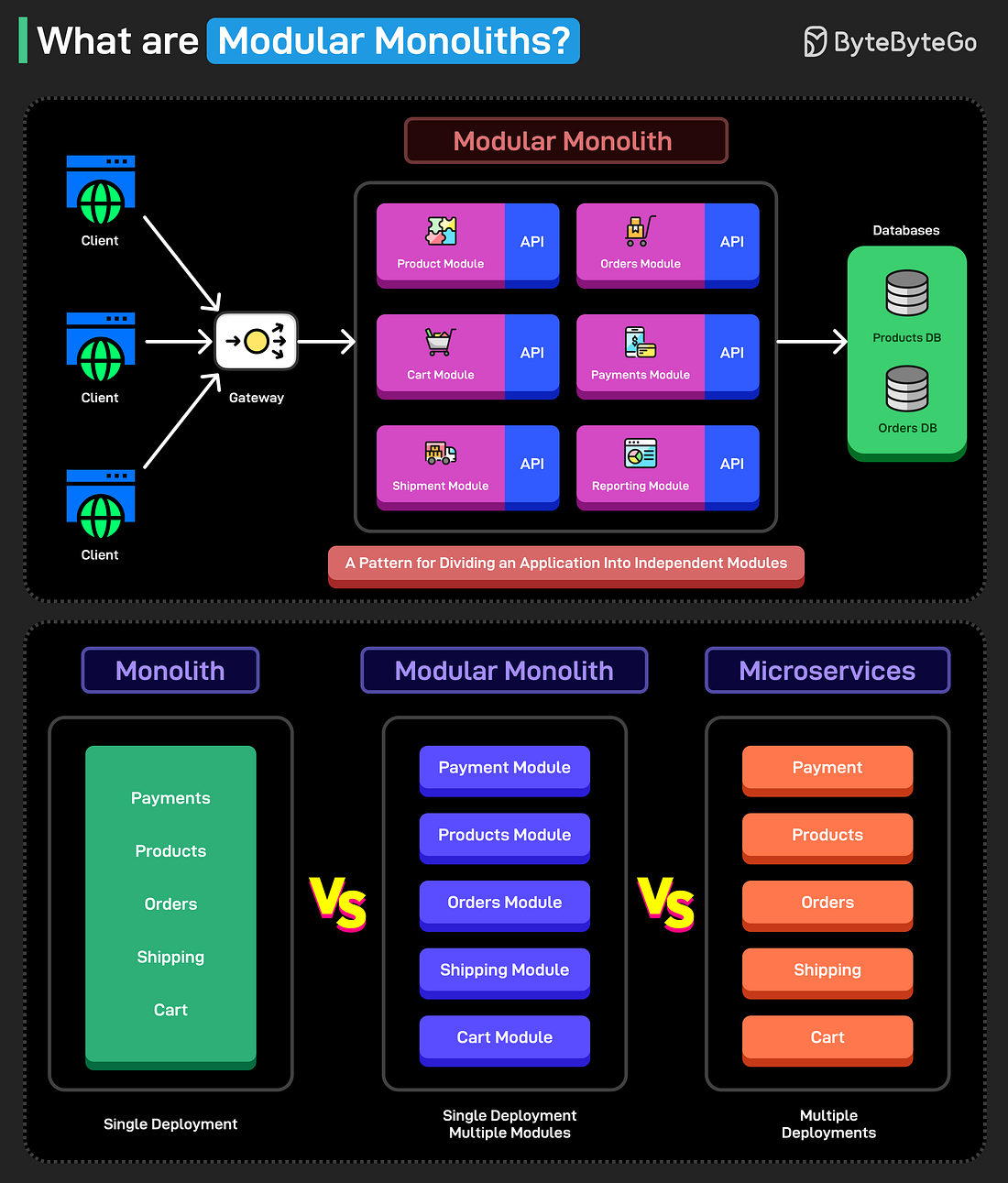
Batch Processing: Collects data in chunks and processes it at scheduled intervals, great for reports and historical analysis. Stream Processing: Processes events continuously in real-time, powering dashboards, alerts, and recommendations. Batch = high-volume, historical accuracy. Over to you: Which do you find harder to scale, batch pipelines or real-time streams? What are Modular Monoliths?A modular monolith is an architectural pattern that divides an application into independent modules or components. Each of these modules has well-defined boundaries that group related functionalities. Doing so results in better cohesion.
Here are the main characteristics of modular monoliths:
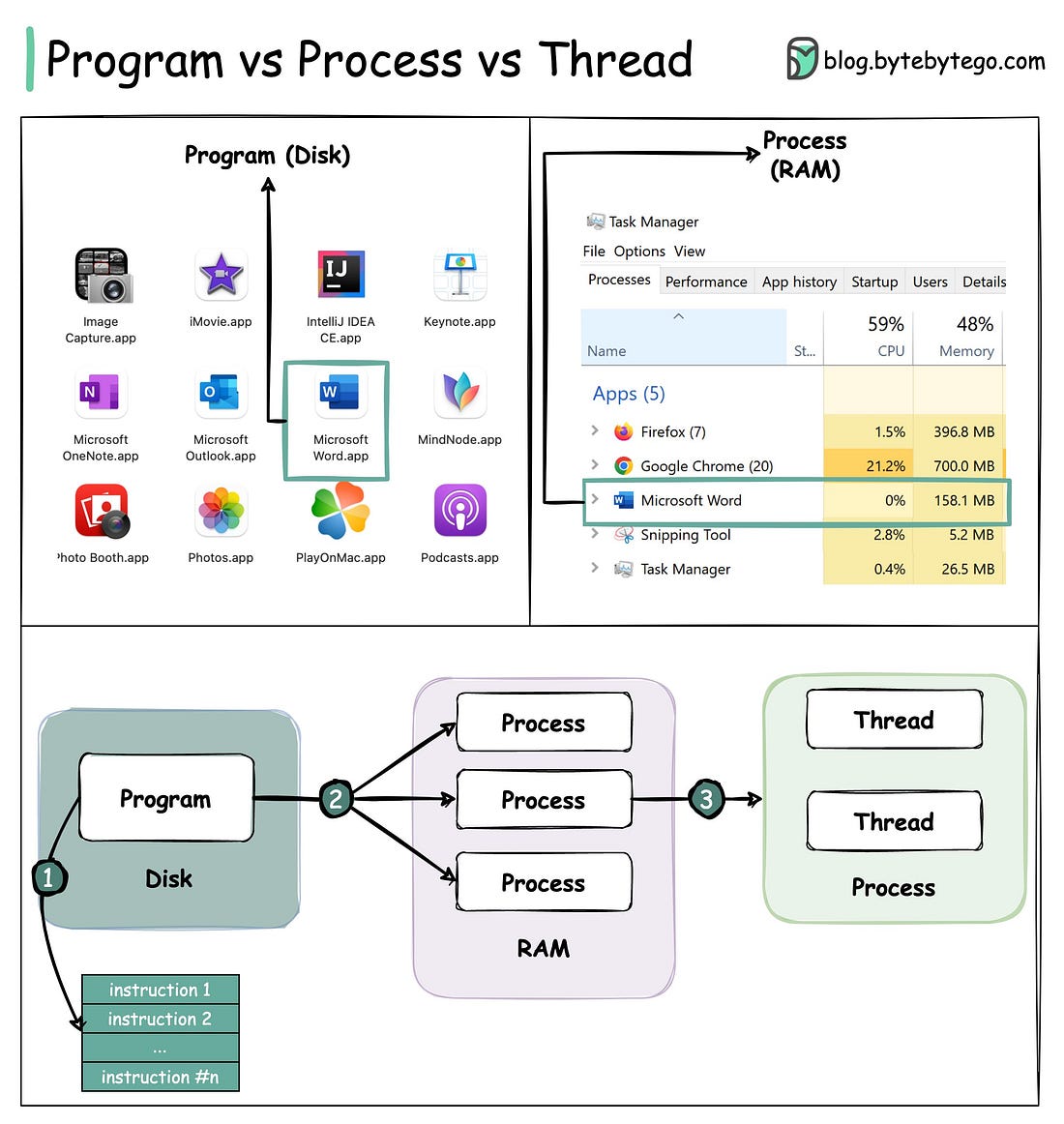
What is the main advantage of modular monoliths? A monolith clubs all the functionalities into one big deployment unit. This makes monoliths simple to understand. Microservices distribute the functionalities into separate deployable units. This makes them more scalable. However, A modular monolith divides the application into modules that are part of the same deployment unit. They combine the simplicity of traditional monolithic applications with the flexibility of microservices. In other words, you can have the best of both worlds with modular monoliths. So - have you used modular monoliths to build applications? Popular interview question: What is the difference between Process and Thread?
Main differences between process and thread:
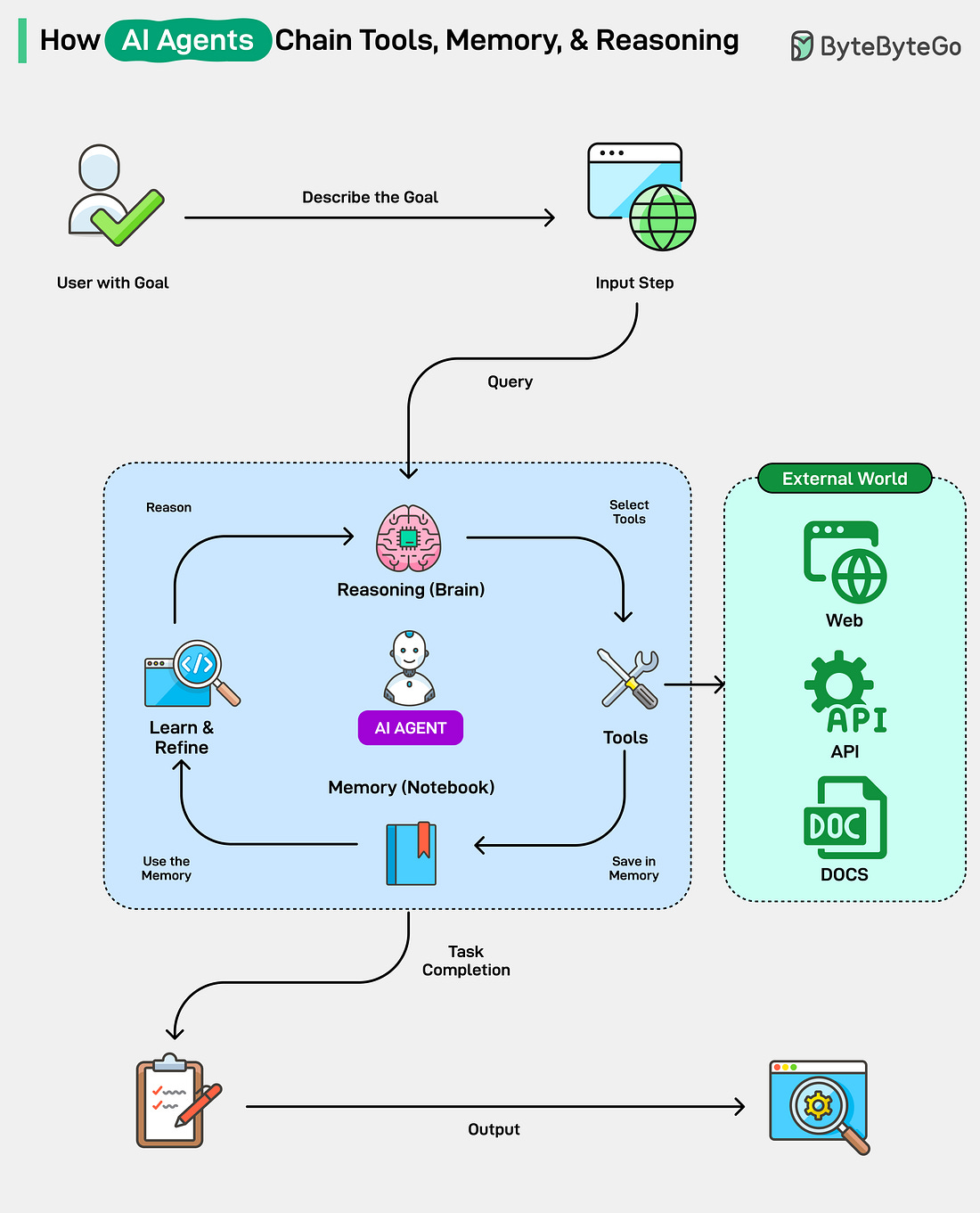
How AI Agents Chain Tools, Memory, and Reasoning?
This continuous loop of reasoning, acting with a tool, and remembering the outcomes creates a chain. Finally, when the agent is satisfied that it has fulfilled the user’s query, it responds to the user. Over to you: Have you used AI agents? Help us Make ByteByteGo Newsletter BetterTL:DR: Take this 2-minute survey so I can learn more about who you are, what you do, and how I can improve ByteByteGo SPONSOR USGet your product in front of more than 1,000,000 tech professionals. Our newsletter puts your products and services directly in front of an audience that matters - hundreds of thousands of engineering leaders and senior engineers - who have influence over significant tech decisions and big purchases. Space Fills Up Fast - Reserve Today Ad spots typically sell out about 4 weeks in advance. To ensure your ad reaches this influential audience, reserve your space now by emailing sponsorship@bytebytego.com.
|
Saturday, October 18, 2025
EP185: Docker vs Kubernetes





Subscribe to:
Post Comments (Atom)
No comments:
Post a Comment